Surgical robotics
Building Surgical Robotics for India

Saurya Mishra
Founder & CEO
/
4 mins read
From a conversation featuring Saurya Mishra with Ginserv and Insider Opinion on precision, affordability, and technological sovereignty in Indian healthcare.
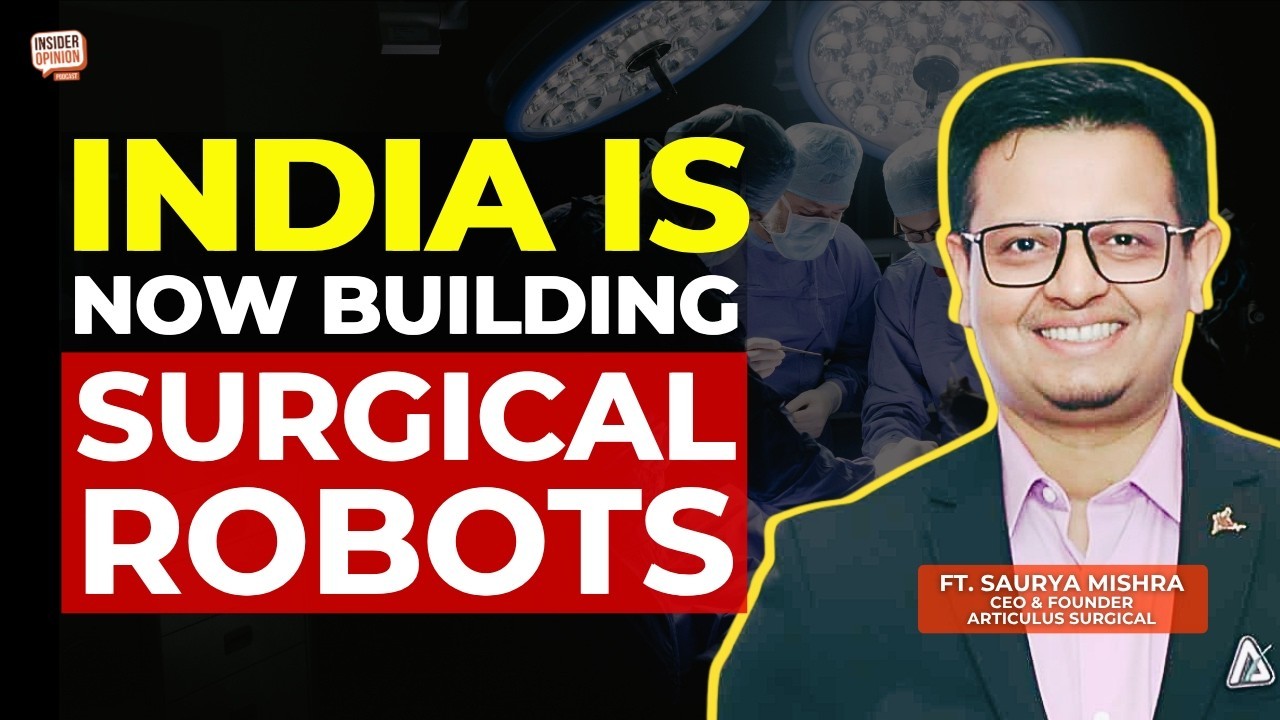
Surgical robotics is often discussed as a breakthrough in technology. But its real value is simpler: it helps surgeons operate with greater precision, stability, and control, while improving outcomes for patients.
In a country where the surgeon-to-patient ratio remains low and healthcare infrastructure is heavily burdened, that advantage matters even more. Surgical robotics is not about replacing the surgeon. It is about combining the strengths of the surgeon with the strengths of the machine so that the patient benefits the most. Surgeons bring judgment, experience, and clinical decision-making. Robots bring steadiness, repeatability, and precision. Together, they create what may best be described as a machine in the middle.
That idea becomes especially important in the Indian context. Conventional surgical robotic systems are often priced at INR 15 to 20 crore or more, putting them out of reach for much of the market. Most of these systems are imported and built for healthcare environments that look very different from those across much of India.
If one of the first challenges Indian patients face is affordability, then the question is not only whether robotic surgery is valuable. The real question is whether these systems can be designed and built here, in a way that makes them more relevant, more practical, and more accessible.
That is the question Articulus Surgical is working to answer.
At the core of this effort is a belief that India must build for its own needs first. Not just by manufacturing locally, but by developing the capability to design, engineer, and deploy critical medical technologies with local relevance. This is what technological sovereignty means in practice: the ability to create advanced healthcare systems in India, for India, with the depth and independence needed to serve patients at scale.
The broader vision is clear. Robotic surgery should not remain limited to a small percentage of patients. It should become more practical, more affordable, and more widely available across Indian hospitals. And if India can build systems that work for its own realities, it can build systems that matter far beyond them.
This is not only a story about robotics. It is a story about access, capability, and the future of healthcare innovation in India.